


Struggling With Disconnected Data?
If your accounting team tracks expenses in one spreadsheet while sales uses another, you’re not alone. Disconnected systems create inefficiencies and errors. This is where Enterprise Resource Planning (ERP) software comes in.
ERP integrates and manages all your core business processes in one unified system. Think of it as the central nervous system of your company—connecting finance, supply chain, sales, HR, and more. With ERP, departments share information seamlessly and automate key tasks.
What is ERP?
Video Source: https://www.netsuite.com/portal/resource/articles/erp/what-is-erp.shtm
Why ERP Matters for Business Growth?
An ERP is no longer a luxury; it’s a necessity for efficient growth. Here’s why it’s so important:
- Breaks Down Silos: One source of truth eliminates data conflicts and improves collaboration
- Drives Smarter Decisions: Real-time analytics and reporting help you spot trends and model outcomes
- Optimizes Resources: Gain visibility into operations to use people, finances, and inventory more wisely
- Boosts Productivity: Automation reduces manual work and errors
- Ensures Security & Compliance: Advanced protections safeguard sensitive data and meet regulations
- Scales With You: ERP grows alongside your business, adapting to new demands
Key ERP Modules
ERP systems are modular, meaning you can choose the components you need. Here are some of the most essential modules:
- Financial Management: General ledger, accounts payable/receivable, reporting
- Human Resources (HRM): PTO, payroll, performance reviews
- Supply Chain Management (SCM): From suppliers to customers
- Customer Relationship Management (CRM): Manage leads, sales, and client interactions
Additional modules include Manufacturing & Inventory Management, Ecommerce & Order Management, Project Management, and Procurement.
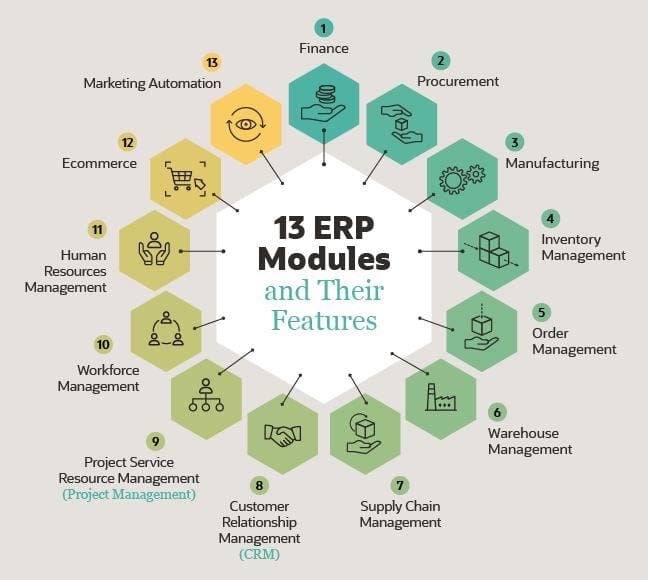
Image Source: https://www.netsuite.com/portal/resource/articles/erp/what-is-erp.shtm
Top 5 Benefits of Implementing an ERP
- Significant Cost Savings: Automation reduces errors and labor costs, while visibility helps you spot operational inefficiencies.
- Complete Visibility: See the status of projects and operations across the entire company in one place, eliminating constant searching for updates.
- Enhanced Productivity: Easy information sharing breaks down departmental walls and allows employees to collaborate effectively.
- Improved Data Security & Compliance: ERP providers use advanced security to protect sensitive data and help you adhere to changing regulations.
- Scalability for Growth: A good ERP system grows with you, easily adapting to increased data and operational changes.
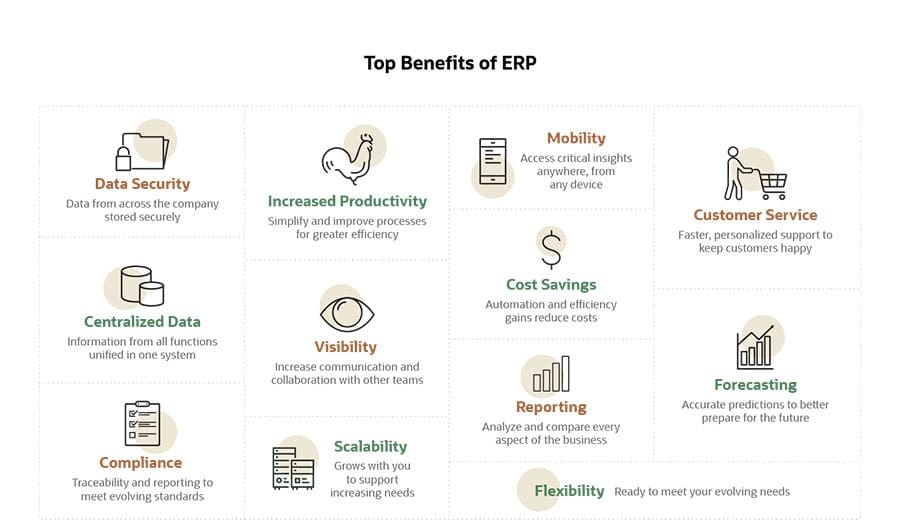
Image Source: https://www.netsuite.com/portal/resource/articles/erp/what-is-erp.shtm
Is It Time for an ERP?
Ask yourself:
- Do we rely too heavily on spreadsheets and email?
- Are disconnected systems causing data conflicts?
- Is it hard to get a clear, real-time view of performance?
If yes, it’s time to consider ERP to streamline operations, reduce costs, and prepare for growth.
Why Choose Motiv Digital for ERP?
Motiv Digital has a 100% success rate delivering NetSuite ERP projects. We transform complex challenges into seamless solutions, empowering businesses to thrive today and scale for tomorrow.
👉 Partner with Motiv Digital to unlock the full potential of ERP and drive exceptional results.